

Baking Science: Baking Soda and Baking Powder

Learn the difference between baking soda and baking powder and what to do in a pinch if you do not have one on hand!
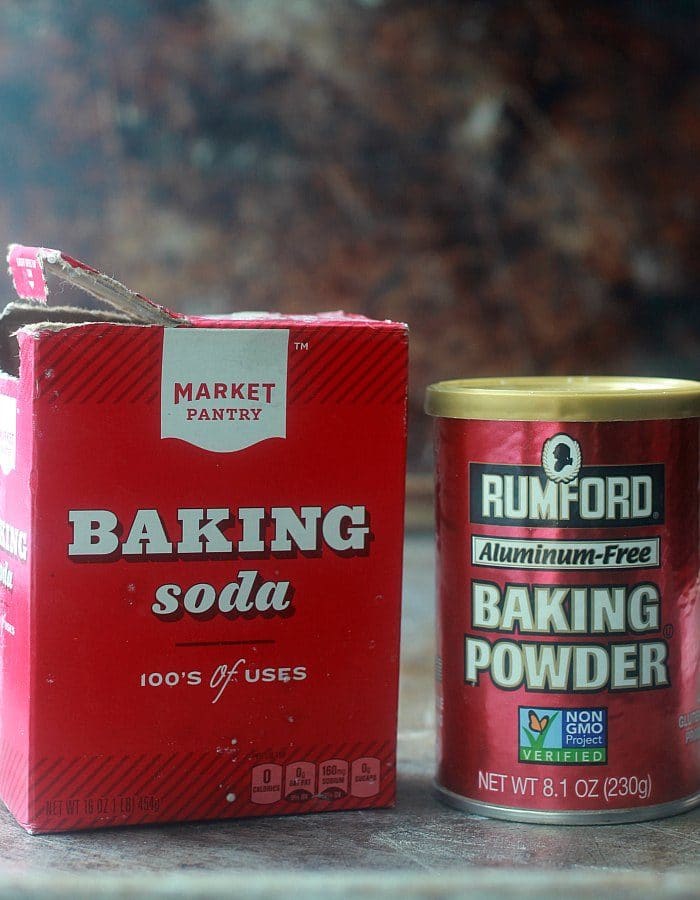
OVERVIEW
Baking soda and baking powder are both chemical leavening agents used in baking. This means that when these two substances are mixed into a dough or batter and baked, a chemical reaction occurs causing the baked goods to rise. The leavening process not only raises the baked good, but also makes it more tender and supports browning.
While they both serve the same main function, the way in which they work to make a baked good rise is different.
Watch my Baking Soda vs. Baking Powder Video!
What Is Baking Soda?
Baking soda, also sometimes referred to as “sodium bicarb,” is plain sodium bicarbonate. On the ph scale, it is considered a basic. In order for it to do it’s job of leavening your baked good, it needs an acidic component to react with.
When the basic properties of baking soda mix with the acidic properties of another ingredient the baking soda works to neutralize the acid and this is what causes the air bubbles (carbon dioxide) that leaven the baked good.
In baking, the usual acidic components include: buttermilk, brown sugar, molasses, vinegar, yogurt, lemon juice (or other citrus juice), natural cocoa powder (dutch processed cocoa powder is not acidic), and chocolate.
Baking soda is ideal to be used instead of baking powder if there is an acidic component because it is about four times more effective than baking powder.
What Is Baking Powder?
Baking Powder is baking soda (sodium bicarbonate) that is already mixed with an acidic ingredients. Therefore, baking powder can be used on its own to leaven baked goods without the need for an acidic ingredient.
Baking powder works in the same way that baking soda does by creating air bubbles (carbon dioxide) which cause the baked good to rise. Most baking powders these days are also “double acting” which means that they actually contain two types of acids, one that reacts when it is hydrated and the other that reacts to the heat of the oven.
Baking powder is about four times weaker than baking soda and it does have a shelf life. Pay attention to the expiration date. If you are in doubt if your baking powder is still good, you can test it.
Test to see if your baking powder or baking soda is active: Add 1 teaspoon of baking powder or baking soda to 1 cup of hot water and stir together.
If it is still fresh, it will start to bubble up. If it does not bubble, the baking powder or baking soda is inactive and needs to be replaced.
Why Do Some Recipes Use Both?
Recipes that call for both usually have to do with the fact that the recipe contains acid that needs to be neutralized by the baking soda, but possibly not enough to do the amount of leavening desired. The baking powder picks up the slack.
Additionally, since baking powder is double acting, it gives even more rise to the baked good.
How to Substitute Baking Soda and Baking Powder
Because baking is a science, it is not ideal to substitute baking soda and baking powder in most recipes. It is best to find a recipe that uses the ingredients you have on hand.
However, if you understand how the two interact, there are some ways to substitute for either if absolutely needed.
HERE ARE A FEW SCENARIOS
My recipe calls for baking soda and I don’t have any
You can substitute the baking soda in the recipe for baking powder if you have it.
The general rule of thumb is that 1 teaspoon of baking soda = 3 teaspoons (or 1 tablespoon) of baking powder
Since the original recipe called for baking soda then the recipe must already contain an acidic ingredient. And since baking powder also contains an acidic ingredient (cream of tartar) then you are all set. You do not need to add more cream of tartar.
My recipe calls for baking powder and I don’t have any
In this scenario, the recipe is asking for baking powder which is baking soda plus cream of tartar so you need to add both.
1 teaspoon baking powder = ¼ teaspoon baking soda plus ½ teaspoon cream of tartar
It’s important to use this conversion and not add too much baking soda. Too much can cause your baked goods to have a metallic or soapy flavor to them.
If you do not have cream of tartar on hand and your recipe has an acidic ingredient present, then you can substitute the baking soda for baking powder.
Use ¼ the amount of baking soda than the amount of baking powder called for in the recipe. Note that per ¼ teaspoon of baking soda you need ample amount of acidity which is about 1 cup of buttermilk, 1 cup of brown sugar, 1 teaspoon of lemon juice, or 1 teaspoon of vinegar.
I don’t have either baking soda or baking powder
Determine how important it is for your baked good to rise. Is it very important, like a cake? Or is it okay if they are a little flat, like cookies? Are there eggs in the recipe? Eggs can help a baked good to rise. If there are eggs in the recipe and it isn’t that important for the baked good to rise, then you can probably leave out the leavener.
I do not suggest this for cakes, muffins, biscuits, etc.
Baking Without Baking Soda OR Baking Powder
If, for some reason, you are unable to use baking soda or baking powder, then there are a few things you can try.
First, think about how important the rise is of this baked good. Is it extremely important, as in for a cake or biscuits, or is it okay if the end result is a little more flat than usual, like a cookie? If the rise of the baked good isn’t extremely important, then you can try the recipe without these leaveners. I have had a lot of success with making cookies without baking soda or baking powder. These chocolate chip cookies are one of my favorites.
If the recipe calls for eggs, try separating the eggs and whip the egg whites to medium peaks. Fold the egg whites in as the very last step of combining the batter. The egg whites while lighten the batter and help it to rise.
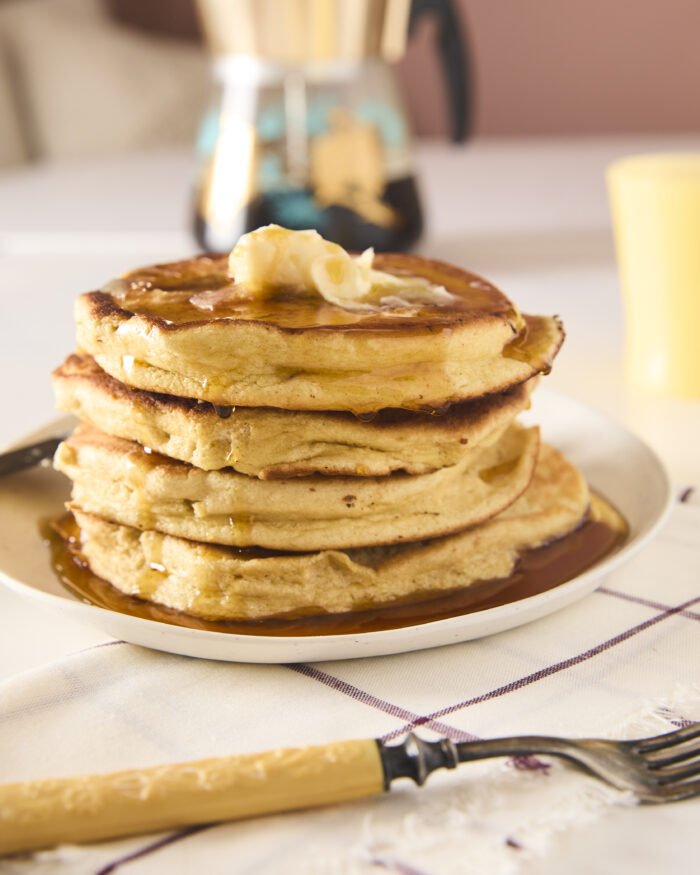
Note that this will not work for a very stiff dough – only for batters. This technique is what I used to make my pancakes without baking powder and for my quick bread without baking soda or baking powder.
Recipes
Below are more of my favorites recipes that can be made without baking soda or baking powder!

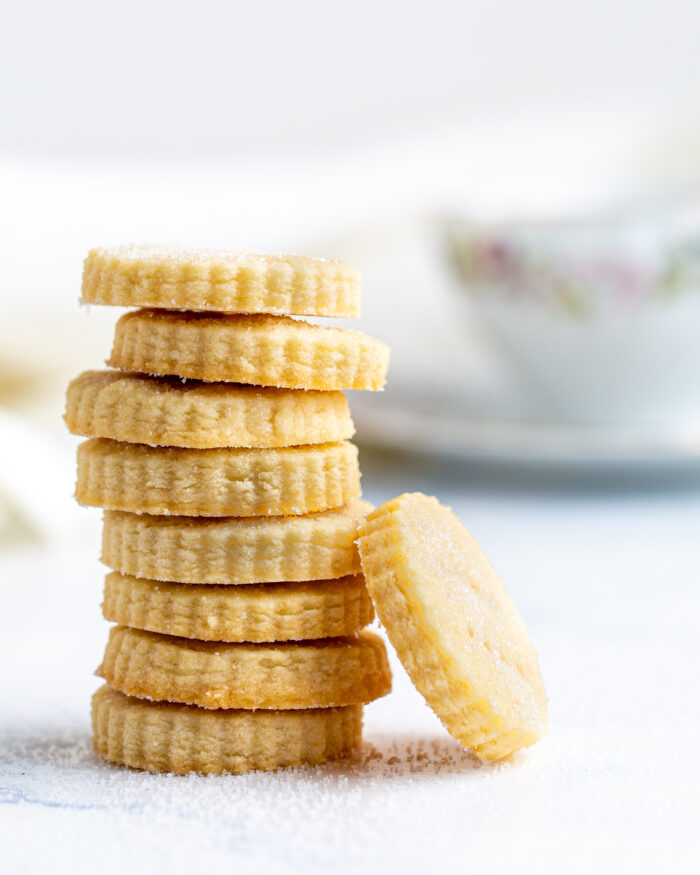
Easy Waffle Recipe (see recipe notes for making without baking powder)
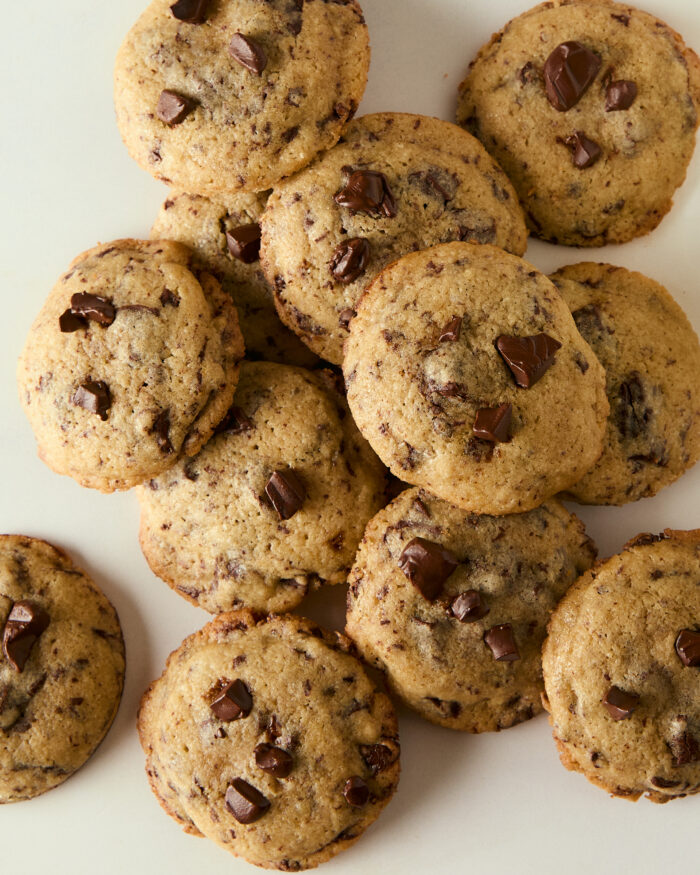
Chocolate Chip Cookies without Baking Soda or Baking Powder

78 Comments on “Baking Science: Baking Soda and Baking Powder”
When baking it always says to add baking soda or baking powder to dry ingredients.
My MIL always said to add it to your liquid to better disperse.
Sometimes I can taste the soda or powder when it is added to the dry, but not when it is added to the liquid.
That’s interesting! I’ve never heard it being added to the wet ingredients. I would think that adding it to the wet would result in little clumps forming.
Lemon Crinkle cookies with lemon juice and zest – I made a batch with only BP and they turned out dome shaped with lots of lemon flavor.
If BS is added in – will it reduce the lemon flavor?
If BS is added in – will it make them flatter?
Thanks
How much baking powder and baking soda do we use per 1 cup of flour? Thank you
Hi, it depends on the recipe and what you are making. It won’t always be the same.